What is a Citation? The Importance of Citations in Local SEO
Learn what citations mean in local SEO. A detailed guide on NAP consistency, citation sources, and best practices for rankings.
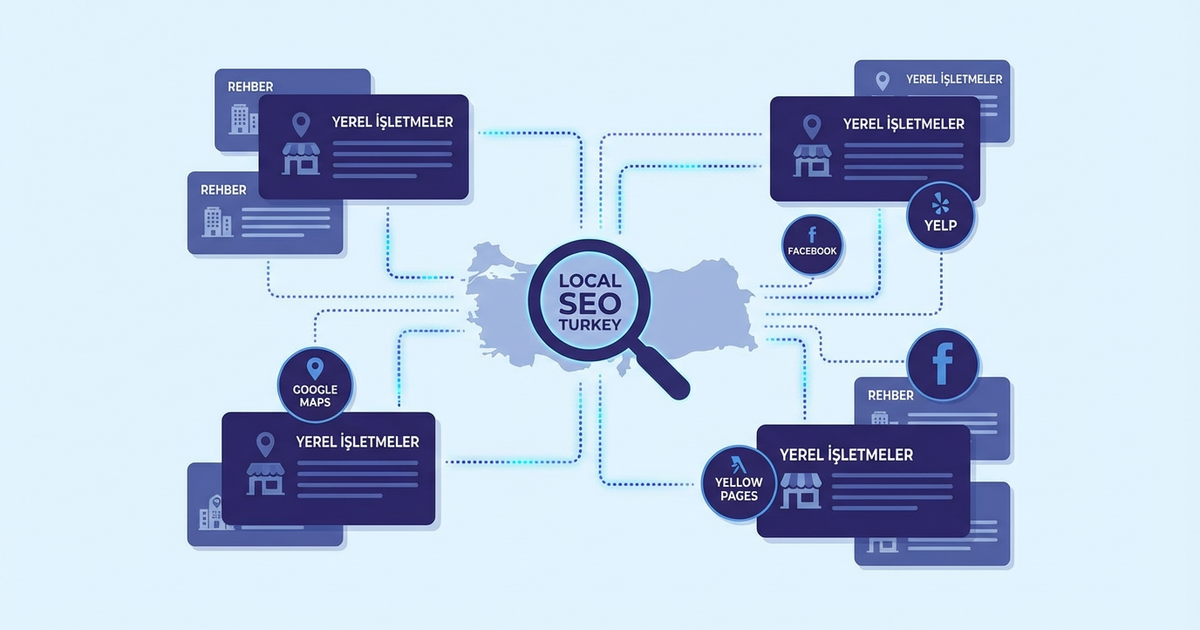
67% of businesses that appear when you search "hairdresser near me" on Google are registered on at least 50 different platforms. Have you ever wondered what these platforms are for? In this article, we will examine in detail the concept of citation — the invisible hero of local SEO.
What is a Citation?
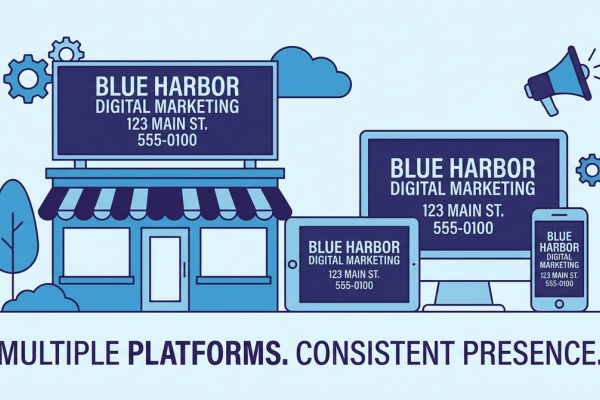
A citation is the appearance of your business's name, address, and phone number (NAP — Name, Address, Phone) on various platforms across the internet. Simply put, it means your business being mentioned in directories like Google Maps, Yelp, Bing Places, Foursquare, and similar platforms.
Citations are divided into two types. Structured citations are your business information registered in a standard format on business directories. Unstructured citations are natural mentions of your business on news sites, blogs, or social media.
Tip: Think of citations as the digital equivalent of "word-of-mouth marketing." The more places you are mentioned, the more Google trusts you.
What matters is not just quantity but also quality. Accurate listings on 20 authoritative platforms are far more valuable than registrations on 100 low-quality sites. Google crawls these citations to verify whether your business actually exists and is trustworthy.
Why Do They Matter?
Citations are one of the three fundamental pillars of local SEO. Along with Google Business Profile optimization and customer reviews, they directly affect your ranking in local searches. So why is this so important?
Trust signal: Having your business registered with the same information on 50 different platforms sends Google the message "this business is real and trustworthy." Especially when NAP consistency is maintained, Google's algorithm moves your business to higher positions.
Local search visibility: Citations improve your ranking in the Local Pack (map results) and organic local searches. Citation count and quality play a critical role, particularly in "near me" searches.
Statistic: According to Moz's 2023 local search ranking factors study, citations account for approximately 10% of local ranking influence.
Discoverability: Potential customers can find you not only on Google but also on platforms like Yelp, Bing, and Foursquare. Each citation is an opportunity to acquire a new customer. Additionally, some customers compare multiple platforms before making a decision.
How Does It Work?
Google's logic for using citations is quite simple. Google bots continuously crawl the internet and collect business information. The more they see the same business name, address, and phone number on different sites, the more they verify the accuracy of this information.
Data collection: Google, Bing, and other search engines collect information from large data providers (like Foursquare and Factual) and local directories. Businesses that have completed the Google Business Profile verification process are given priority in this data.
Verification: Information from different sources is matched. If there are inconsistencies (for example, "St." on one site and "Street" on another), Google has difficulty determining which is correct and your trust score decreases.
Warning: If you have changed your address, you must update all your citations. Otherwise, Google gets confused and your ranking may drop.
Ranking impact: Consistent and quality citations are processed as positive signals in local search algorithms. Google considers businesses mentioned across multiple reliable sources as "more trustworthy" and moves them to higher positions.
Examples
Let's clarify the difference with examples of good and bad citations:
Good Citation Examples
Structured citation (Google Business Profile):
Business Name: Rose Garden Florist
Address: 123 Main Street, Suite 4, Downtown, New York, NY 10001
Phone: (212) 555-0123
Structured citation (Bing Places):
Business Name: Rose Garden Florist
Address: 123 Main Street, Suite 4, Downtown, New York, NY 10001
Phone: +1 (212) 555-0123
Success: The information across two different platforms is 99% identical. Minor format differences (phone format) are normalized by Google.
Unstructured citation (Blog post): "We interviewed Rose Garden Florist (Downtown NYC, 212-555-0123), one of New York's best florists."
Bad Citation Examples
Inconsistent address:
Platform 1: 123 Main St, Ste 4, Downtown
Platform 2: Main Street 123/A Downtown
Platform 3: Downtown, New York (address incomplete)
Different phone numbers:
Google: (212) 555-0123
Bing: (212) 555-0124 (wrong)
Foursquare: (917) 555-4567 (mobile)
Wrong: These inconsistencies reduce Google's trust and lower your ranking.
Best Practices
Follow these steps to strengthen your citation strategy:
1. First, Set Up Your Google Business Profile
Your Google Business Profile is the reference point for all your citations. The information you enter here should be the "gold standard." Address, phone, business hours, category — everything should be complete and accurate.
Make sure to complete profile verification. Unverified profiles lose trust in Google's eyes and reduce the impact of your other citations.
2. Maintain NAP Consistency
Use the same format on every platform. Decide whether you will write "St." or "Street" and always use the same one. Set whether your phone number will be (212) 555-0123 or 212-555-0123.
Tip: Save your standard format in a spreadsheet. Copy and paste from there for each new listing.
Take immediate action on address changes: If you relocate, update major platforms like Google, Bing, and Yelp within 24 hours. Then gradually complete the rest.
3. Prioritize Quality Platforms
Priority citation sources:
- ▸Google Business Profile (absolute priority)
- ▸Bing Places
- ▸Apple Maps
- ▸Yelp
- ▸Foursquare
- ▸Industry-specific directories (TheFork for restaurants, Booksy for salons, etc.)
General directories:
- ▸Facebook Business
- ▸Better Business Bureau
- ▸Yellow Pages
- ▸Industry associations
Warning: Stay away from spam directories. 100 low-quality citations are more harmful than 10 quality ones.
4. Monitor Citations Regularly
Check all your listings every 3 months. Someone may have incorrectly edited your business information (especially on Google Maps, where anyone can suggest edits).
Tools like Moz Local, Yext, or BrightLocal automate citation tracking. If you do not want to use paid tools, you can create a spreadsheet and track manually.
5. Support with Visuals
Adding photos to Google Maps is also part of your citation strategy. Citations can include not just text but also visuals. Use the same logo, storefront photo, and similar visuals across all platforms.
Common Mistakes
Common traps businesses fall into with citation management:
Mistake 1: Leaving Old Information Without Updating
Scenario: You moved from one neighborhood to another 2 years ago, but 15 platforms like Yelp and Yellow Pages still have your old address registered.
Wrong: Google will not show you in searches for your new area because your citations still reference the old location.
Solution: Start a "citation update project" at the time of your move. Update major platforms first, then smaller ones. Complete it within 1 month.
Mistake 2: Inconsistent Business Names
Common example:
Google Business Profile: Mike's Barbershop
Bing: Mike Barber
Yelp: Mike's Barber Shop & Salon
These three different names confuse Google. It cannot determine which is correct. Result? All three remain unlinked and SEO value is lost.
Success: Standardize to "Mike's Barbershop" across all platforms.
Mistake 3: Wrong Category Selection
Selecting different categories on each platform dilutes your citation power. If you chose "Barber" on Google Business Profile, do not write "Beauty Salon" on Bing or "Hair Stylist" on Yelp.
Correct approach: Determine your main category (e.g., "Barber") and select the closest match on all platforms.
Mistake 4: Registering on Spam Directories
Stay away from services offering "automatic registration on 1,000 directories." Google detects such spam citations and can penalize them. Citations from low-quality sites are worse than having no citations at all.
Warning: If you have paid for such a service in the past, you may need to identify and remove spam citations.
Mistake 5: Focusing Only on Quantity
The thinking "I have 100 citations, my competitor has 50, I will win" is wrong. 10 authoritative, consistent citations >> 100 random, inconsistent citations.
Correct strategy: Make the first 20 citations perfect (major platforms + industry directories). Then gradually expand.
Related Terms
Learn these terms to strengthen your citation strategy:
NAP Consistency (Name, Address, Phone Consistency): The foundational concept of citations. Having your business information exactly the same across all platforms. Read our NAP consistency guide.
Local Pack: The 3-business listing that appears below the map in Google searches. Citation quality and quantity directly affect your ability to appear in the Local Pack. Explore Local Pack details.
Google Business Profile Verification: The first step in citation strategy. Unverified profiles cannot get full value from citations. Learn about the verification process.
Local Ranking: This is the ultimate goal of citations. Getting Google to rank you higher in local searches.
Data Aggregators: Large data providers like Foursquare and Factual. Registering with them causes your information to automatically distribute to hundreds of smaller directories.
Success: Citation strategy is a marathon, not a sprint. Lay the foundation in the first 3 months, then perform regular maintenance. You will see significant ranking improvements in local search within 6 months.
Is Your Google Business Profile Ready?
Before building a citation strategy, find out the status of your Google Business Profile. With ajanslokal's free Google Business Profile Analysis, review your profile across 20 different categories:
- ▸Is your business information complete?
- ▸Are the categories correctly selected?
- ▸Do you have enough photos?
- ▸Are you responding to customer reviews?
Discover the power of citations and leave your competitors behind in local search.
Sources:
- ▸Moz Local Search Ranking Factors (2023)
- ▸Google Business Profile Help Center
- ▸Search Engine Journal - Local SEO Guide
- ▸BrightLocal Local Citation Survey
Author
ajanslokal Team
We create content about digital marketing strategies and solutions for local businesses.
Grow Your Business in the Digital World
Be more visible on Google, win more customers. Get your free digital presence audit now!
Get Free Audit